

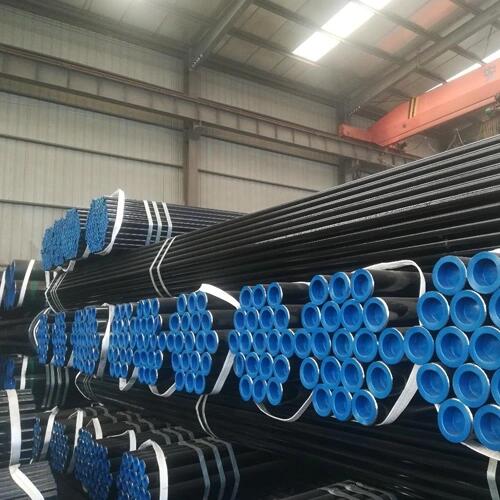
In the production and manufacturing of pipes and pipe fittings, ASTM A106 Schedule 40 pipes is a specification of the American Standards Institute (ANSI), which refers to steel or PVC pipes with a wall thickness of 2.77mm. Its standards are ANSI/ASME B36.10M and ANSI/ASME B36.19M.
Where are Schedule 40 pipes used for?
Schedule 40 pipes are a common wall thickness standard pipe suitable for a variety of medium and low pressure occasions. Because of its moderate thickness, it can be applied to many different fields, such as construction, water supply, drainage systems, etc. Sch 40 pipes balance strength, durability and economy. The following are its main applicable occasions:
1. Low-pressure fluid transportation
Building water supply system: widely used in cold water and hot water supply systems in buildings, as well as fire sprinkler systems (low pressure).
Drainage/sewage: used for drainage, wastewater and ventilation systems in residential and commercial buildings.
HVAC: refrigerant pipes, condensate discharge, etc.
2. Industrial Applications
Chemical/Pharmaceutical: It can be used for industrial fluid transportation, transporting non-corrosive liquids and gases (such as compressed air). The material should be selected according to the medium, such as PVC, carbon steel or stainless steel.
Food Processing: Stainless steel Schedule 40 pipes are used for sanitary fluid transportation, such as dairy products and beverages.
3. Gas Transportation
Natural Gas/LPG: Used in low-pressure distribution systems (must comply with local regulations, the material is usually carbon steel or galvanized steel).
4. Structural Uses
Support/Frame: Used as scaffolding, guardrails or simple structural supports, usually carbon steel pipes.
5. Electrical Engineering
Sch 40 pipes are mainly used for cable protection in urban traffic engineering in electrical engineering. Their high tensile strength and pressure resistance (can withstand 5000 psi pressure) are suitable for scenarios that need to cope with mechanical stress changes. At the same time, its fire resistance meets the UL651 standard (National Electrical Code of the United States), and is suitable for outdoor installation environments with strict fire protection requirements.
6. Special Environments
Corrosive Environments: Schedule 40 pipes made of PVC or CPVC can be used for chemically corrosive media (such as acids and alkalis).
Outdoor Exposure: Galvanized steel pipes or weather-resistant materials are used for outdoor pipes to resist rust.
7. Temporary Installations
Construction Sites: Temporary water supply and compressed air pipes for easy installation and removal.
Precautions for the use of Sch 40 pipes:
1. Pressure/Temperature Limitations
The working pressure of Sch 40 pipes is usually ≤150 psi (about 10 bar), depending on the material (such as PVC has a lower pressure resistance than steel pipes).
Heat-resistant materials should be selected for high-temperature applications.
Compliance with regulations: Standards such as ASME B36.10 (steel), ASTM D1785 (PVC) and local regulations must be followed.
Corrosion Protection: Stainless steel, galvanized or plastic materials should be selected for corrosive environments.
2. Inappropriate Occasions
High-pressure/high-temperature environments: For example, steam pipelines, Schedule 80 or higher is required.
Extremely corrosive environments: Strong acid/alkaline environments require special materials, such as plastic-lined pipes or titanium pipes.
High impact loads: Scenarios susceptible to mechanical damage require thicker walls or protective measures.
 How to Choose Carbon Steel Pipe Size?
 DIN 1629 St37 St52 Seamless Steel Pipes
 Boiler Tube Size Chart
 API 5L SSAW Steel Pipe Definition and Grades

