

As an important part of boiler equipment, boiler tubes are responsible for multiple tasks such as transferring heat and withstanding pressure. The size selection of boiler tubes directly affects the performance and safety of the boiler. So, how to choose the size of boiler tubes?
Boiler tubes come in a variety of sizes, depending on the application and pressure requirements. The size of the tubes is generally defined by their outer diameter (OD) and wall thickness (WT). Below is a general chart listing typical boiler tube size & specification in mm:
|
Outer Diameter (OD) |
Wall Thickness (WT) |
Common Standards |
Application |
|
12.7 mm (1/2 inch) |
1.2 mm - 3.0 mm |
ASTM A192, A210, A213 |
Low-pressure boilers, heat exchangers |
|
15.9 mm (5/8 inch) |
1.2 mm - 3.5 mm |
ASTM A179, A210, A213 |
Heat exchangers, economizers |
|
19.05 mm (3/4 inch) |
1.5 mm - 4.0 mm |
ASTM A179, A210, A213 |
Low-pressure steam boilers |
|
25.4 mm (1 inch) |
1.6 mm - 4.5 mm |
ASTM A192, A210, A335 |
Power plant boilers |
|
31.75 mm (1-1/4 inch) |
2.0 mm - 5.0 mm |
ASTM A213, A335 |
High-pressure steam boilers |
|
38.1 mm (1-1/2 inch) |
2.2 mm - 5.6 mm |
ASTM A210, A213, A335 |
Medium and high-pressure boilers |
|
50.8 mm (2 inch) |
2.5 mm - 6.0 mm |
ASTM A210, A213, A335 |
High-pressure boilers, superheaters |
|
63.5 mm (2-1/2 inch) |
2.8 mm - 7.0 mm |
ASTM A213, A335 |
Superheater tubes |
|
76.2 mm (3 inch) |
3.0 mm - 8.0 mm |
ASTM A335, A213 |
High-temperature service |
|
88.9 mm (3-1/2 inch) |
3.2 mm - 10.0 mm |
ASTM A210, A335 |
High-pressure boilers |
|
101.6 mm (4 inch) |
3.5 mm - 12.0 mm |
ASTM A335, A213 |
Superheaters, reheaters |
|
114.3 mm (4-1/2 inch) |
4.0 mm - 14.0 mm |
ASTM A335, A213 |
Power plant steam systems |
|
127 mm (5 inch) |
4.5 mm - 16.0 mm |
ASTM A335 |
Steam pipelines, large industrial boilers |
Notes:
Outer Diameter (OD): This is the external diameter of the tube.
Wall Thickness (WT): The thickness of the tube wall, which determines its ability to handle pressure.
Common Standards: Boiler tubes adhere to international standards like ASTM (American Society for Testing and Materials), ASME (American Society of Mechanical Engineers), which ensure their quality and performance under specific conditions.
Boiler tube application specifications:
Smaller diameters (12.7 mm - 25.4 mm OD) are typically used for low-pressure steam boilers, heat exchangers, and economizers.
Medium diameters (31.75 mm - 50.8 mm OD) are used in medium-pressure and high-pressure boilers, as well as superheaters.
Larger diameters (63.5 mm - 127 mm OD) are often used in large industrial boilers, power plants, and high-pressure steam pipelines.
The actual size and material selection will depend on the specific requirements of the boiler system, including its pressure and temperature ratings.
Selection guide for seamless boiler tubes:
1. Consider the working pressure: The working pressure of the seamless boiler tube is an important factor to consider when selecting. Generally speaking, the higher the working pressure, the greater the required boiler tube wall thickness. Therefore, when selecting boiler tubes, it is necessary to select the appropriate wall thickness according to the working pressure of the boiler.
2. Consider the medium temperature: The medium temperature transported by the seamless boiler tube is also one of the factors to be considered when selecting. The higher the medium temperature, the higher the material requirements for the boiler tube. Generally speaking, high-temperature media require boiler tubes made of high-performance materials such as high-temperature alloy steel.
3. Consider the conveying medium: Different conveying media have different material and performance requirements for seamless boiler tubes. For example, when conveying corrosive media, it is necessary to select boiler tube materials with corrosion resistance.
Boiler tubes are used under high temperature and high pressure conditions, and are often affected by high temperature flue gas and water vapor, which are prone to oxidation and corrosion. Therefore, boiler tubes need to have high lasting strength, high oxidation and corrosion resistance, and good structural stability. Seamless tubes can better meet these requirements due to their manufacturing process and material selection.
 Pressure rating of stainless steel seamless pipes
 API 5L Pipe Specification: Line Pipe Grades PSL1 & PSL2
 ASTM A53 vs ASTM A106 Carbon Steel Pipe: Key Differences & Selection Guide
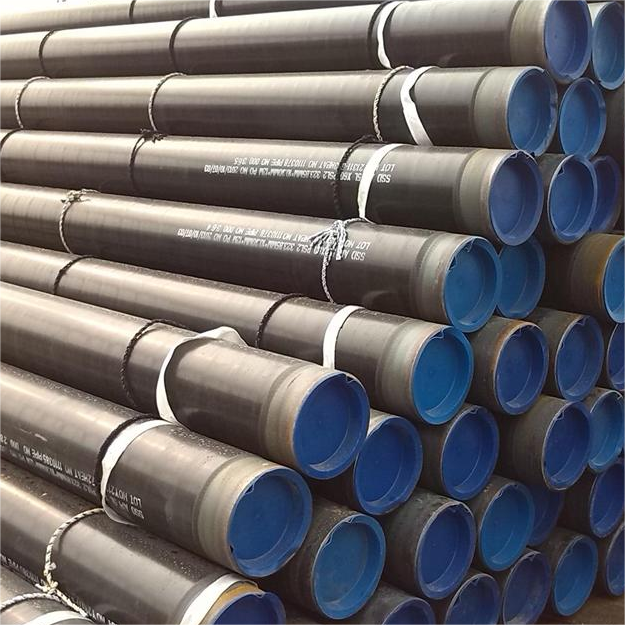 ASTM A53 GR.B ERW Steel Pipe

