

Stainless steel seamless pipes (SS seamless pipe) are a kind of high-strength and corrosion-resistant pipe material, which is widely used in fluid transportation systems in the petroleum, chemical, pharmaceutical, food and other industries. Different application scenarios require the selection of stainless steel seamless pipes with different pressure ratings.
Generally speaking, the pressure ratings of stainless steel seamless pipes include 10MPa, 16MPa, 25MPa, 32MPa, 40MPa and other grades, among which the highest pressure rating can reach more than 100MPa. Different grades of stainless steel seamless pipes have obvious differences in pressure resistance, and the pressure rating that meets actual needs should be selected.
Pressure rating classification of stainless steel seamless pipes:
The pressure rating of stainless steel seamless pipes refers to its ability to withstand pressure, usually in MPa (megapascals). The pressure rating of stainless steel seamless pipes can be divided into the following grades:
1. High pressure rating: generally 100MPa and above.
2. Medium pressure rating: generally 10-100MPa.
3. Low pressure rating: generally below 10MPa.
Pressure bearing capacity of different grades of stainless steel seamless pipes:
The pressure bearing capacity of stainless steel seamless pipes is directly related to their pressure resistance grade. The following table shows the common pressure resistance grades of stainless steel seamless pipes and their corresponding pressure bearing capacity.
| Pressure grade | Pressure bearing capacity (MPa) |
| 100MPa | 100 and above |
| 60MPa6 | 60 and above |
| 40MPa | 40 and above |
| 30MPa | 30 and above |
| 20MPa | 20 and above |
The impact of the size of stainless steel seamless pipes on their pressure bearing capacity:
The size of stainless steel seamless pipes also has a direct impact on their pressure bearing capacity. Generally speaking, the smaller the diameter and the thinner the wall thickness of stainless steel seamless pipes, the less pressure they can withstand. Therefore, when choosing stainless steel seamless pipes, it is necessary to choose the appropriate size and pressure grade according to the specific working scenario and the required pressure bearing capacity.
Advantages of stainless steel seamless pipes:
The material of stainless steel seamless steel pipes is mainly stainless steel, which has a series of advantages.
First, stainless steel has excellent antioxidant and corrosion resistance, and can withstand the erosion of various chemical corrosive media such as acid, alkali, and salt.
Secondly, stainless steel has high strength and hardness, is not easy to deform and break, and performs well in high-intensity operating environments.
In addition, stainless steel has a high surface finish, is easy to clean and disinfect, and is suitable for transportation systems in the fields of medicine and food.
Processing technology of stainless steel seamless pipes:
The processing technology of stainless steel seamless pipes is relatively complicated and requires multiple processes to be made. Generally, it includes material selection, billet processing, perforation, rolling, stretching, heat treatment, cold drawing, polishing, testing and other links. Among them, rolling, stretching and heat treatment processes have a great influence on the mechanical properties and corrosion resistance of the pipeline.
Application areas of stainless steel seamless pipes:
Stainless steel seamless pipes are a very important industrial pipeline material, widely used in high pressure, low temperature, corrosion and high temperature scenes requiring high strength and high resistance in industries such as petroleum, chemical, electric power, aerospace, etc.
Shengtian Group introduces the pressure levels and related knowledge of stainless steel seamless pipes, including the pressure bearing capacity and influencing factors of stainless steel seamless pipes, the advantages, processing technology and application fields of stainless steel seamless pipes. When selecting stainless steel seamless pipes, different pressure levels should be selected according to actual needs Email : pipe@stpipefitting.cn
 API 5L Pipe Specification: Line Pipe Grades PSL1 & PSL2
 ASTM A53 vs ASTM A106 Carbon Steel Pipe: Key Differences & Selection Guide
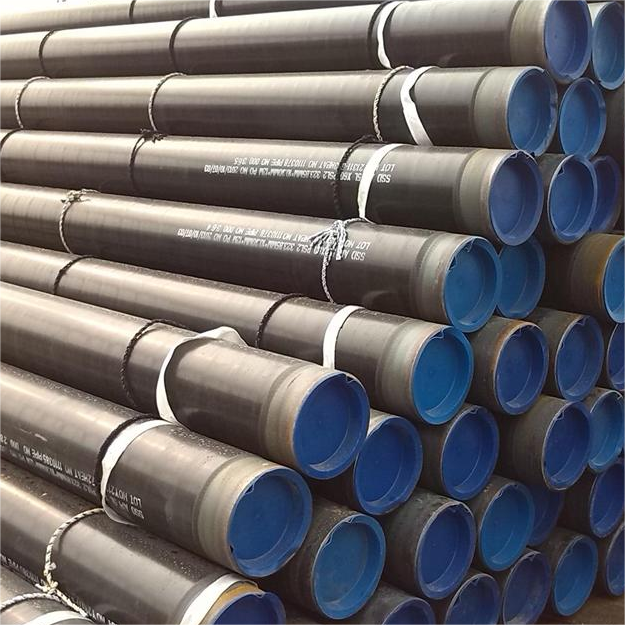 ASTM A53 GR.B ERW Steel Pipe
 Seamless steel pipe schedule 80

