

When selecting carbon steel pipe (CS Pipe) size, pipe diameter (NPS/DN), wall thickness (Schedule Number), and pressure rating are three interrelated core parameters. Their selection requires comprehensive calculation based on the system design pressure, flow rate, and medium characteristics.
1. Define Requirements
Before starting the carbon steel pipe size calculation, the following basic information must be collected:
a. Medium: Water, steam, oil, gas, chemicals, etc. Its characteristics (such as corrosivity, viscosity, and presence of solid particles) directly affect the material and wall thickness selection.
b. Flow Rate: The maximum, normal, and minimum flow rates required by the system.
c. Operating Pressure and Temperature: The highest (design) pressure and highest (design) temperature during system operation.
d. Relevant Standards: The specifications followed by the project (such as ASME, EN, GB, etc.).
2. Determine Pipe Diameter
Pipe diameter is primarily determined by the fluid flow rate and recommended flow velocity.
Calculation formula: Flow rate = Pipe cross-sectional area × Flow velocity
Common fluid flow velocities in carbon steel pipes (reference):
Water and other low-viscosity liquids: 1.5 - 3 m/s
Saturated steam: 20 - 40 m/s
Compressed air: 10 - 20 m/s
General gases: 10 - 30 m/s
Steel Pipe Size Selection:
Common carbon steel pipe diameters range from DN15 to DN600. Smaller pipe diameters (e.g., DN15-DN50) are commonly used for low-flow applications such as instrument nozzles, sampling lines, or high-pressure injection ports. Medium-sized pipe diameters (e.g., DN80-DN250) are mostly used in plant process pipelines, equipment connections, and regional distribution systems, with designs that optimize both flow distribution and spatial layout. Larger pipe diameters (e.g., DN300-DN600) are primarily used in main industrial process pipelines and urban infrastructure backbone networks, designed not only to meet ultra-high flow rate requirements but also to maintain an economical flow rate to minimize energy consumption and long-term operating costs.
Preliminary Pipe Diameter Determination: Based on the flow rate and the selected flow velocity range, calculate the required inner diameter using a formula, then select the closest standard nominal size from pipe standards (e.g., ASME B36.10 steel pipe size table).
Selection Tips:
Choosing a lower flow velocity can reduce pressure drop, lower pumping costs, and reduce water hammer risk, but requires a larger pipe diameter, resulting in higher initial investment.
Choosing a higher flow velocity can reduce pipe diameter and save material costs, but leads to increased pressure drop, noise, and accelerated pipe wear.
3. Determining Wall Thickness
Wall thickness determines the pressure-bearing capacity and mechanical strength of the pipeline. We determine the wall thickness by selecting the Schedule Number.
Key Factors:
Design Pressure: Higher pressure requires a thicker wall.
Design Temperature: High temperatures reduce the allowable stress of the material, thus requiring a thicker wall.
Corrosion Allowance: If the medium is corrosive, an additional thickness needs to be added to the calculated wall thickness to ensure the pipeline's safety throughout its design life.
Pipe Material: Different standards of carbon steel (such as ASTM A53, A106) have different allowable stresses. The chemical composition and mechanical properties specified by the standards also differ.
Pipe Wall Thickness Rating Selection:
The wall thickness rating directly determines the pipeline's pressure-bearing capacity. Different series are available, such as SCH20, SCH40, SCH80, and SCH160. Thin-walled or standard-walled pipes, such as SCH20/SCH40, have limited pressure-bearing capacity and are suitable for low-pressure, normal-pressure, or non-pressure-bearing systems. For building water supply and drainage, ventilation, and low-pressure circulating water, SCH40 pipes are the most common "standard wall thickness." For medium-pressure, high-temperature, or corrosive industrial piping systems, such as process piping, high-pressure steam, and oil/gas transportation, thicker series such as SCH80, SCH160, or XXS must be selected.
Calculation Method: For critical pipelines, the wall thickness must be calculated using a standard formula (such as the internal pressure straight pipe wall thickness formula in ASME B31.3), and then rounded up to the nearest standard schedule number.
4. Determining the Pressure Rating
The final pressure rating of a pipeline is not a fixed value, but rather the result of calculation and verification using standard formulas based on the selected material, precise pipe diameter, and wall thickness.
The correct selection process for carbon steel pipe sizes is: first, determine the pipe diameter based on flow rate; second, select the wall thickness based on pressure; and finally, verify through calculation whether the pressure rating under this combination meets design requirements. For less important or non-critical systems, selection can be based on experience. However, for all industrial pressure piping, it is strongly recommended that professional engineers conduct rigorous design and calculations in accordance with relevant standards (such as ASME B31.3) to ensure the safe, reliable, and economical operation of the system Email : pipe@stpipefitting.cn
 Pressure rating of stainless steel seamless pipes
 API 5L Pipe Specification: Line Pipe Grades PSL1 & PSL2
 ASTM A53 vs ASTM A106 Carbon Steel Pipe: Key Differences & Selection Guide
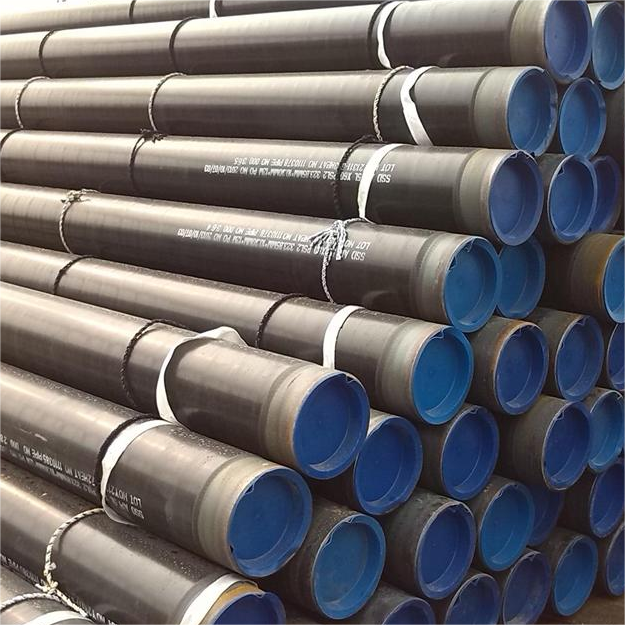 ASTM A53 GR.B ERW Steel Pipe

