

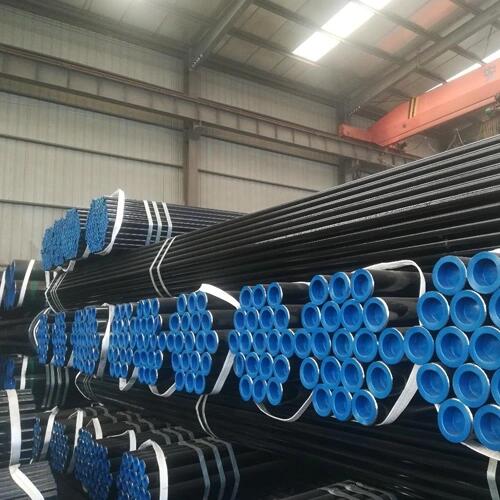
ASTM A519 Mechanical tubes are tubes used in mechanical and light structural applications. Mechanical tubes are produced to meet specific end-use requirements, specifications, tolerances and chemical compositions.
This allows for more specific performance uniformity throughout the tube compared to standard pipes. While ASTM A519 mechanical tubes can be produced to standard specifications upon request, they are usually produced to "typical" properties, which focus on yield strength for a specific size and wall thickness. In some severe forming applications, yield strength may not even be specified, and mechanical tubes are produced to be "fit for use". Mechanical tubes cover a wide range of structural and non-structural applications.
Importance of ASTM A519 mechanical tube quality inspection:
Quality inspection of mechanical tubes ensures product quality and safety. Through comprehensive testing of mechanical tubes, problems in product design, manufacturing and materials can be discovered, so that corresponding improvement measures can be taken to improve product reliability and stability and enhance the market competitiveness of enterprises.
The methods for quality inspection of ASTM A519 mechanical tubes mainly include the following aspects:
1. Appearance inspection
Inspect the appearance of mechanical tubes visually or using tools, including the gloss of the outer surface, the flatness of the surface, and defects such as scratches and cracks. Attention should be paid to checking whether there are problems such as desoldering and corner bending at both ends of the tube, and whether there are abnormal conditions such as depressions and bulges on the tube wall.
2. Dimension inspection
Use measuring tools to measure the dimensions of mechanical tubes, including diameter, wall thickness, length, etc. Use measuring tools such as calipers and micrometers to measure and compare with manufacturing standards to check whether they meet the specified size range.
3. Internal inspection
Evaluate the internal quality of mechanical tubes through fluid or optical inspection methods. Fluid inspection (air tightness inspection) usually includes testing the flow performance of liquid or gas in the pipeline to detect leaks, blockages and other problems. Optical inspection can use equipment such as endoscopes to observe welds, edges and corners inside the tube.
4. Chemical composition analysis
By analyzing the physical and chemical composition of the mechanical tube, it can be detected whether its material meets the standard requirements. Common chemical analysis methods include spectral analysis, electron probe analysis, etc.
5. Stress test
By applying a certain stress on the mechanical tube, it is detected whether the pipeline can withstand pressure and maintain the stability of shape. Common mechanical property test methods include pressure test, impact test, hardness test, etc., to test the strength, toughness and other mechanical properties of the pipe.
6. Non-destructive testing
Such as ultrasonic testing, X-ray testing, magnetic particle testing, etc., to detect whether there are defects inside the pipe.
7. Metallographic analysis
Observe the microstructure of the pipe through a microscope to evaluate its quality and performance.
ASTM A519 mechanical tube can be effectively evaluated. When conducting the test, the relevant standards should be strictly followed, and accurate and reliable testing equipment and methods should be used to ensure the accuracy and reliability of the test results.
 How to Choose Carbon Steel Pipe Size?
 DIN 1629 St37 St52 Seamless Steel Pipes
 Boiler Tube Size Chart
 API 5L SSAW Steel Pipe Definition and Grades

