Differences between API 5L X60 and ASTM steel pipes

Views : 977
Author : admin
Update time : 2024-12-05 09:18:16

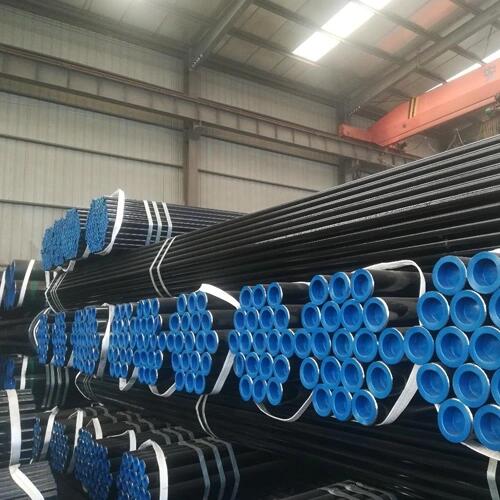
     API 5L X60 Pipe is a common high grade pipe material in API 5L specifciations for oil and gas transmissions. It’s also called L415 pipe, which named by yield strength minimum in 415 Mpa (60,200 psi). It covers manufacturing types in seamless (hot rolled and colde rolled), and welded in ERW, LSAW, SSAW (HSAW).

        API 5L X60 is a specification for line pipe with a minimum yield strength of 60,000 psi, commonly used in oil and gas transportation. When seeking an equivalent in the ASTM standards, there are a few options to consider:

  ASTM A106 Grade B and C:

  ASTM A106 Grade B: This specification covers seamless carbon Steel pipe for high-temperature service. The yield strength for Grade B is typically 35,000 psi, which is lower than API 5L X60.

  ASTM A106 Grade C: The yield strength for Grade C is approximately 40,000 psi, still lower than X60 but closer.

  ASTM A53 Grade B and C:

  ASTM A53 Grade B: This specification covers seamless, welded black, hot-dipped galvanized steel pipe. The yield strength for Grade B is 35,000 psi.

  ASTM A53 Grade C: The yield strength for Grade C is also 35,000 psi.

  ASTM A333 Grade 6:

  This specification covers seamless and welded steel pipe for low-temperature service. The yield strength is around 35,000 psi.

  ASTM A572 Grade 60:

  ASTM A572 Grade 60: This specification covers high-strength, low-alloy structural steel. The yield strength for Grade 60 is 60,000 psi, making it a closer match to API 5L X60 in terms of yield strength.

  While there isn't a perfect ASTM equivalent to API 5L X60, ASTM A572 Grade 60 is the closest in terms of yield strength. For specific applications, it's essential to consider the chemical composition, mechanical properties, and intended use to determine the best equivalent. Consulting with Email : pipe@stpipefitting.cn for your specific needs.

Related News
Read More >>
Working Pressure of Seamless Steel Pipe Working Pressure of Seamless Steel Pipe
Sep .17.2026
  Seamless steel pipe actual bearing pressure may be affected by many factors such as the quality of the pipe, processing technology, and use environment Please feel free to contact us if you have any questions Email : pipe@stpipefitting.cn
(SMLS pipe) is a type of pipe produced without welds by deforming the metal as a whole using piercing and rolling techniques. Compared to welded steel pipe, its core advantage stems from the continuity of the material and the uniformity of its structure, providing superior reliability and safety under high pressure, high temperature, and complex stress environments. This makes seamless steel pipe a fundamental and reliable material in the petroleum, chemical, natural gas, and power industries for critical processes and the transportation of hazardous media.
Seamless carbon steel pipe Sch 40 Seamless carbon steel pipe Sch 40
Sep .15.2026
Seamless Carbon Steel Pipe Sch 40 (Schedule 40) is a seamless steel pipe specification that meets the American standard. Its pipe wall thickness is Sch40 (corresponding to the standard wall thickness series), which represents the standard wall thickness under a specific pressure level and is often used in occasions with higher pressure and temperature.
Schedule 80 Carbon Steel Pipe: Thickness, Dimensions & Weight in mm Schedule 80 Carbon Steel Pipe: Thickness, Dimensions & Weight in mm
Sep .10.2026
Schedule 80 Carbon Steel Pipe is made up of carbon steel materials. The carbon steels can vary in composition based on the grades. The strengths and the toughness vary. To have an international and equal identification of the pressure capacities of the pipes, the schedule scale is used. The wall thickness grades of the steel pipe range from Schedule (SCH) 5 to Schedule (SCH) 160. SCH 5 has the lowest pressure resistance, while SCH 160 has the highest.
Steel Pipe Sizes Explained: NPS, OD and Wall Thickness Steel Pipe Sizes Explained: NPS, OD and Wall Thickness
Sep .08.2026
Steel pipe sizing can be confusing, especially for buyers who are new to piping specifications. A pipe's designated size often differs from its actual dimensions, which can lead to mistakes during purchasing or design.