

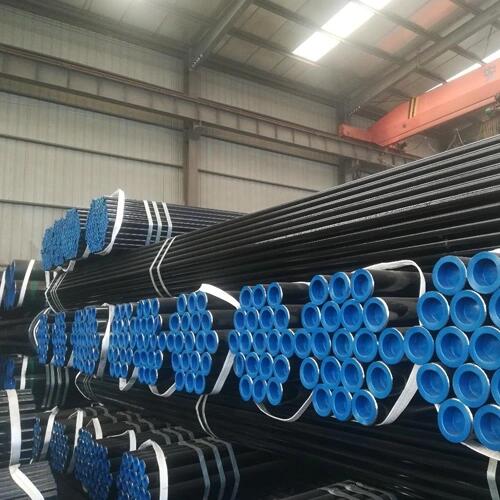
ASTM A500 Structural seamless steel pipes are seamless steel pipes used for general structures and mechanical structures. They are often used to manufacture pipelines, containers, equipment, pipe fittings and mechanical structures. They have great effects and wide applications. Structural stainless steel seamless pipes are hot-rolled (extruded, expanded) and cold-drawn (rolled) seamless pipes made of stainless steel for corrosion-resistant pipes and structural parts and parts in industries such as chemical, petroleum, textile, medical, food, and machinery.
The standard for structural steel pipes is ASTM A500, which is a standard specification for cold-formed welded and seamless carbon steel structural tubing in rounds and shapes. China's standard GB/T 8162-2018, this standard is applicable to seamless steel pipes for mechanical structures and general engineering structures.
Mechanical Tubing vs. Structural Tubing
| Category | Mechanical Tubing | Structural Tubing |
|---|---|---|
| Definition | Used for mechanical and light gauge structural applications. | Used for structural applications. |
| Produced to meet specific requirements, tolerances, and chemistries. | Often referred to as hollow structural sections (HSS). | |
| Available Shapes | Square, Rectangle, Round, Custom Shapes | Square, Rectangle, Round, Custom Shapes |
| Applications | (1)Solar Racking- Agricultural and dairy products (2)Greenhouse structures (3)Playground equipment (4)Conveyor rollers (5)Carports and metal buildings (6)Trailers |
(1)Bridges- Towers- Cranes (2)Sign supports and poles (3)Off-shore production and drilling platforms (4)Roll-over protective structures (ROPS) |
| Specifications | Manufactured to typical properties or ASTM A500 and A513 Types 1 and 2 | Varies based on design and manufacturer, includes ASTM A500 Grade B and C, A847, A1065, A1085 |
| Distinguishing Factors | Focuses on yield strength for particular size and wall thickness | Standard strength requirements dictate appropriate applications |
| Can be produced to be "fit for use" in severe forming applications | Not typically used in applications requiring severe forming | |
| Encompasses both structural and non-structural applications | Primarily used in structural applications |
According to different applications, seamless pipes can be divided into mechanical steel pipes, boiler pipes, fluid pipes and structural pipes. Mechanical steel pipes are mainly used in machinery manufacturing and equipment manufacturing. Common standards for mechanical steel pipes are ASTM A519, which is a standard specification for seamless carbon and alloy steel mechanical tubing. ASTM A554, which is a standard specification for welded stainless steel mechanical tubing. ASTM A513, which is a standard specification for electric-resistance-welded carbon and alloy steel mechanical tubing.
 How to Choose Carbon Steel Pipe Size?
 DIN 1629 St37 St52 Seamless Steel Pipes
 Boiler Tube Size Chart
 API 5L SSAW Steel Pipe Definition and Grades

